

Dermal fillers are gel-like substances composed of hyaluronic acid—a substance that occurs naturally in healthy skin—and are used to plump out or fill in the lines and wrinkles caused by the ageing process.
Depending on their consistency, dermal fillers can be injected into various parts of the face, successfully yet subtly enhancing many facial features. The final result should be a refreshed, natural-looking face rather than an obviously “treated” one. Dermal fillers are also used to enhance a client’s facial features and to provide additional structural support to an ageing face.
Dermal fillers work through two main mechanisms: immediate physical volume replacement and secondary biological stimulation. The specific principle depends on the type of filler, but for the hyaluronic acid fillers commonly used in your clinic, it is primarily based on the physical filling and water-binding properties of hyaluronic acid.
💧 Immediate Volume Effect: Physical Filling and Water Binding
Hyaluronic acid is a naturally occurring polysaccharide in human skin, with extremely strong water-binding capacity, capable of binding a large amount of water molecules . After injection into the dermis or subcutaneous layer, it physically fills the depressed areas caused by wrinkles or volume loss, while attracting surrounding water molecules, causing the tissue to immediately plump up and thereby smoothing folds and restoring facial contours .
🌱 Secondary Biological Effects: Not Just “Filling”
Research shows that the effects of hyaluronic acid fillers are not limited to simple physical occupation. After injection, hyaluronic acid can serve as a scaffold, promoting the migration and proliferation of fibroblasts, thereby stimulating the production of collagen and elastin in the surrounding tissue . Although hyaluronic acid itself is gradually broken down by the body over time (typically lasting 6 to 12 months) , the newly generated autologous tissue partially replaces the degraded filler, which also explains why some people experience longer-lasting results than expected .
⏳ Duration and Metabolism
Hyaluronic acid fillers are gradually absorbed by the body’s natural enzymes, so the effects are temporary and reversible . Different products vary in cross-linking technology and formulation, with duration typically ranging from 6 to 12 months, and sometimes up to 2 years . After complete absorption, the skin returns to its pre-treatment state and requires repeat treatment to maintain the effects.
Key Point: The core function of hyaluronic acid fillers is to use the water-binding properties of hyaluronic acid for physical filling, while bringing mild collagen stimulation effects. The effects are immediate but temporary, and safety depends on product quality and the injector’s technique.
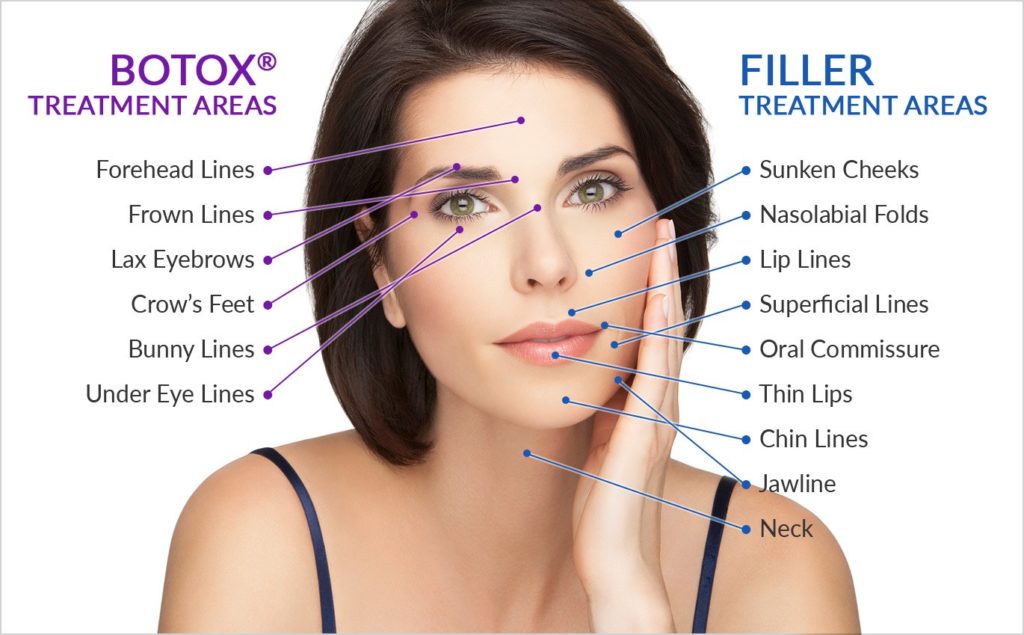
Dermal fillers can last anywhere between 6 to 18 months. The duration is partly depending on the type of dermal filler used and the area it is used in. Additional factors such as brand, lifestyle choices, and general health may also impact duration.
The combination treatment of toxin followed by fillers can last twice as long as fillers alone, and the two injectables complement each other by targeting multiple areas of the face simultaneously.
Dermal fillers are generally safe when administered by a qualified practitioner using approved products—but they are not risk-free.
Common side effects include bruising, redness, swelling and tenderness at the injection site. These are usually mild and resolve within a few days to weeks.
Rare but serious risks include accidental injection into a blood vessel, which can cause skin necrosis, stroke or blindness. These complications are uncommon but can be permanent, and certain areas—such as between the eyebrows, the nose and the forehead—carry higher risk.
Safety depends on:
Choosing a qualified, experienced practitioner
Using approved, legitimate products
Avoiding permanent fillers, which carry higher complication rates
Disclosing your medical history and medications honestly
In short: fillers are safe for most people when done properly, but the key is choosing a skilled practitioner and understanding the risks before proceeding.
There is some mild discomfort but we use a variety of techniques to make it as close to pain-free as possible. The type of Dermal Filler we use at DJ Clinic contains lidnocaine, a local anstetic, to minimalises your discomfort. Topical numbing cream can be applied if you are concerned.
The side effects of dermal filler treatment can be divided into common, temporary reactions and rare, more serious complications.
Common, Temporary Side Effects
These are the most frequently reported effects and usually resolve on their own within a few days to weeks . They include:
Swelling
Pain or tenderness
Bruising or bleeding at the injection site
Redness (erythema)
Nodules or irregularities (lumps under the skin)
Hardness or stiffness in the treated area
A systematic review found that the overall prevalence of these temporary side effects can be relatively high (around 63% in the studies reviewed), but they are generally mild and short-lived .
Rare but Serious Complications
While uncommon, more severe complications can occur, particularly with certain products or if the filler is injected incorrectly:
Vascular occlusion: This happens when filler is accidentally injected into a blood vessel, blocking blood flow. This can lead to skin necrosis (tissue death) and, in very rare cases, blindness or stroke if the filler travels to the eye or brain.
Infection: Can occur at the injection site.
Granuloma: A chronic inflammatory reaction forming a nodule.
Migration: The filler can move from the original injection site .
Important Considerations
Delayed Reactions: Swelling or inflammation at the filler site has been reported rarely following viral infections or vaccinations (like COVID-19 or flu) .
Product Type Matters: The risks described above are primarily associated with hyaluronic acid (HA) fillers, which are temporary and reversible. Permanent fillers (like PMMA) carry significantly higher risks of long-term complications such as chronic inflammation, migration, and granuloma formation, and they cannot be easily removed .
Practitioner Skill: The risk of serious complications, especially vascular issues, is significantly reduced when the treatment is performed by a qualified, experienced practitioner with a thorough understanding of facial anatomy.
If you experience severe pain, blanching (white skin) near the injection site, or vision changes immediately after treatment, seek urgent medical attention.